Air purifier vs humidifier vs dehumidifier: three jobs
Air purifier vs humidifier vs dehumidifier: one filters particles, one adds moisture, one removes it. Which fits which complaint, with EPA's humidity limits.
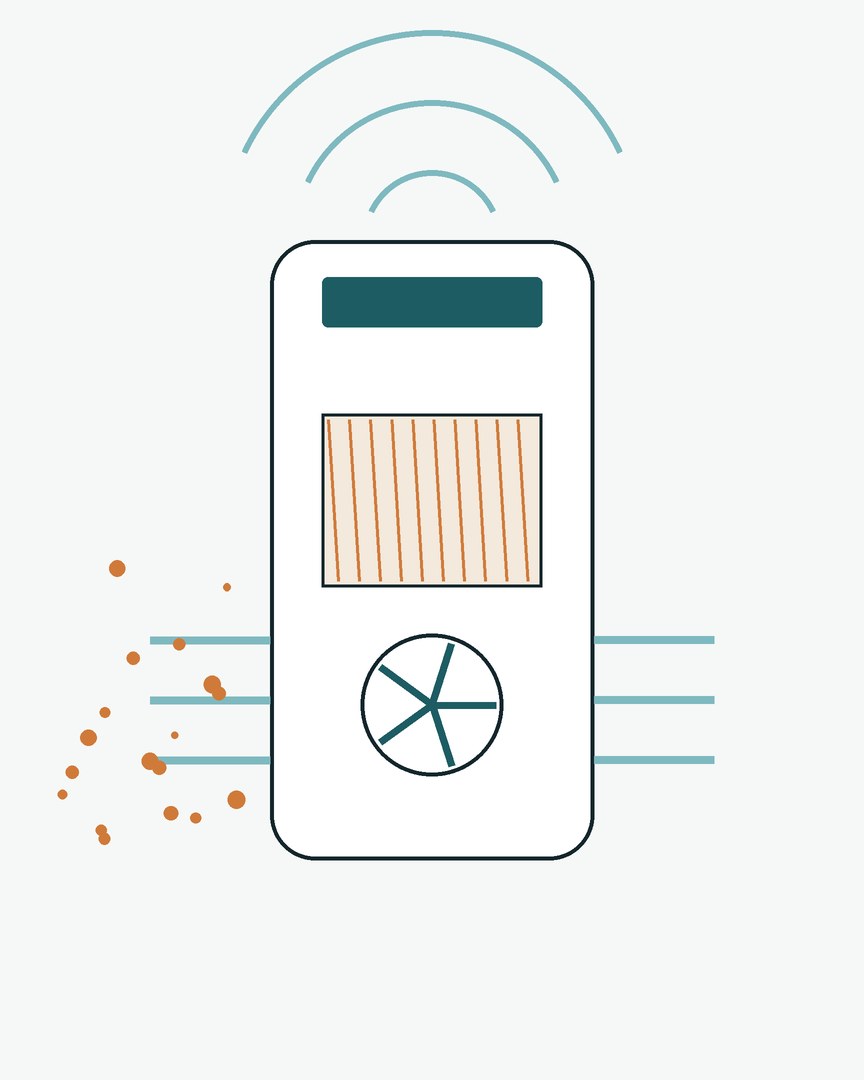
An air purifier, a humidifier and a dehumidifier do three different jobs, and none of them does another’s. An air purifier takes particles out of the air. A humidifier adds water vapor. A dehumidifier removes water vapor. So the choice between air purifier vs humidifier comes down to what is actually wrong with the air: something floating in it, too little moisture, or too much. A particle filter has no way of changing humidity, and EPA’s wildfire smoke guide says in plain words: “Humidifiers are not air cleaners. They will not significantly reduce PM2.5 concentrations during a smoke event, nor will they remove gases.”
What each machine actually does
| Air purifier | Humidifier | Dehumidifier | |
|---|---|---|---|
| What it changes | Particles in the air, and some gases if it has a sorbent stage | Adds water vapor or mist | Removes water vapor |
| What it does not change | Humidity | Particles (some types add them) | Particles |
| Main upkeep | Filter replacement | Frequent cleaning of the tank | Emptying or draining, cleaning the bucket and coil as directed |
| What to measure | The problem you bought it for, such as particle levels | Relative humidity | Relative humidity |
An air purifier draws room air through a filter with a fan and returns it with fewer particles. EPA’s Technical Summary says devices designed only to remove particles “are incapable of controlling gases and some odors”, and water vapor is a gas too.
A humidifier puts water into the air, either as vapor from an evaporating or heated source, or as a fine mist from an ultrasonic or impeller mechanism. A dehumidifier does the reverse, taking water out of the air into a bucket or a drain.
Start by measuring humidity
Before buying anything for dampness or dryness, buy or borrow a small humidity gauge and take readings for a few days in the room you care about. A complaint of “dry” or “stuffy” air is a poor guide on its own. A number lets you act on the actual problem, and it tells you when to stop.
Three published figures are useful here, and they come from different documents written for different purposes:
- EPA on mold: “If possible, keep indoor humidity below 60 percent (ideally between 30 and 50 percent) relative humidity.”
- EPA on humidifiers: “Do not humidify to indoor relative humidity levels exceeding 50 percent.”
- The dust mite practice parameter published in 2013: it says “relative humidity in the home should be kept at 35% to 50% to decrease the growth of dust mites.” Mites, it says, “require RH higher than 65% to prevent water loss and to thrive.”
The ranges overlap. EPA’s humidifier limit, the upper end of EPA’s ideal range and the top of the mite range are all 50 percent, a useful point at which to stop adding moisture.
Which device fits which problem
| What you notice or measure | First look at | The machine that fits, if any |
|---|---|---|
| Dust, pollen or pet dander in the air | Cleaning, the source, ventilation | Air purifier with a particle filter |
| Smoke drifting in from outside | Keeping it out, closing the house | Air purifier sized for the room |
| Cooking or chemical smells | Ventilation and the source | Purifier with a substantial carbon stage, with limits |
| Humidity reading low, usually in winter | Whether air leaks are bringing in dry air | Humidifier, kept below 50 percent as EPA advises |
| Humidity reading high, condensation, damp basement | Water leaks, drainage, bath and kitchen exhaust | Dehumidifier |
| Visible mold or a persistent musty smell | The moisture source, and cleaning up the mold | Neither a purifier nor a humidifier |
Where more than one row applies, more than one machine may be justified. They don’t conflict in principle. A home can have dry winters and pollen in spring.
Mold is a moisture problem
Filtering the air does not fix a mold problem. EPA’s moisture guide says “the key to mold control is moisture control”, and “if you clean up the mold, but don’t fix the water problem, then, most likely, the mold problem will come back.”
EPA’s Technical Summary is equally direct about air cleaners: they “will not prevent mold growth, nor will they rid the house of mold.” The guide to mold and air purifiers goes further into what a filter can and cannot do there.
A dehumidifier can help hold a damp room below EPA’s humidity limit, but it does not repair a leak or remove mold that has already grown. EPA also warns that “dead mold may still cause allergic reactions in some people”, so “it is not enough to simply kill the mold, it must also be removed.”
The humidifier that is not cleaned
A humidifier left uncleaned can become a problem of its own. EPA’s page on home humidifiers says “microorganisms often grow in humidifiers which are equipped with tanks containing standing water”, and instructs: “Clean portable humidifiers every third day.”
Ultrasonic and impeller humidifiers bring a second issue. EPA says they are “very efficient at dispersing minerals in tap water into the air”, and that “white dust” may appear on surfaces. That is a particle source the machine creates. EPA says “distillation is the most effective method for removing minerals from water”, so distilled water is the straightforward answer for those types.
Keep the routine simple:
- Use water with low mineral content in ultrasonic and impeller units.
- Clean portable units every third day, as EPA says, following the maker’s cleaning instructions.
- Check the humidity gauge and turn the unit down or off before the room reaches 50 percent, EPA’s limit.
- Look for wet patches, condensation on windows and damp sills, which can mean the room is getting too much moisture.
Humidity that is too high creates its own problems, so a humidifier needs a limit as much as a dehumidifier does.
Allergies and dust mites sit between the machines
Here both humidity and filtration come up, and evidence is limited for both. The 2013 dust mite practice parameter says mite allergen mostly settles “within 15 minutes of disturbance”, which limits what a filter can reach. It says that “HEPA filters have not been shown to be effective for decreasing mite allergen exposure”, calling HEPA filtration “of uncertain benefit” while noting that it “can decrease local exposure to airborne mite allergens”, and it rates that recommendation “weak, C evidence.”
The same paper’s stronger recommendation is not about a machine at all: it recommends “mite allergen–proof mattress, box spring, and pillow encasings” at strong, B evidence. Its humidity range is a reason to be careful with a humidifier in a home where mites are the concern.
None of this makes a device a treatment for allergy or asthma. A purifier cleans air, a humidifier adds moisture, and neither one cures any condition. Anyone with symptoms should work with a clinician. For the evidence on particle allergens, see the guide to air purifiers and allergies.
Using more than one
Nothing in principle stops a purifier and a humidifier sharing a room, or a purifier and a dehumidifier running in the same basement. The sensible limit is that each one answers something you have measured or can name. A few practical notes follow:
- Run a dehumidifier with a humidity setting, if it has one, and do not aim lower than you need to.
- Combination units exist. The EPA pages cited here report no tests of them, so the usual concerns apply to each half: filter replacement for one, tank cleaning for the other.
If the only symptom is that the air feels unpleasant, a gauge reading and a look for the source are often more useful first steps than any of the three machines.
Common questions
Is an air purifier or humidifier better for allergies?
They address different things, and neither is an allergy treatment. A 2013 practice parameter on dust mites calls HEPA filtration of uncertain benefit for mite allergen, and EPA ties mold control to moisture control. A humidifier adds moisture, and too much of it can favor both, so a clinician is the right person to ask about symptoms.
Can I use an air purifier and a humidifier in the same room?
Yes, they do separate things. Keep the humidifier clean and use low-mineral water, since an ultrasonic or impeller unit can put tap-water minerals into the air. Watch the humidity reading so the room stays under EPA's limit.
Does an air purifier help with humidity?
No. A particle filter has no means of adding or removing water vapor, so the humidity in the room stays as it was. If the air feels damp or dry, measure it and use the machine that handles moisture.
Which is better for a bedroom?
It depends on what a humidity gauge reads and what is in the air. A dry bedroom with a clean, maintained humidifier is one situation, and a bedroom with pet dander or smoke drifting in is another. The device should answer a measured problem rather than a general wish for better air.
Are air purifier and humidifier combo units a good idea?
The EPA pages cited here report no tests of combination units either way. The normal concerns about each half still apply, including EPA's instruction to clean portable humidifiers every third day. Separate machines can also be replaced or placed independently.
Sources
- U.S. EPA: Use and Care of Home Humidifiers
- U.S. EPA: A Brief Guide to Mold, Moisture and Your Home
- U.S. EPA: Residential Air Cleaners, A Technical Summary, 3rd edition
- U.S. EPA and federal partners: Wildfire Smoke, A Guide for Public Health Officials
- Environmental assessment and exposure control of dust mites: a practice parameter (Ann Allergy Asthma Immunol, 2013)
Read next
Do air purifiers work? What the evidence shows
Do air purifiers work? They measurably cut airborne particles in a room. Health results are smaller and mixed. What trials measured, found and did not show.
How to choose an air purifier: a step-by-step decision
How to choose an air purifier: name the problem, size CADR to the room, check the filter, noise at your real setting and ozone, and know when not to buy.
How do air purifiers work? Fan, filter and repeated passes
How do air purifiers work? A fan pulls room air through a filter and returns it, again and again. What each method removes, and what an air purifier cannot do.
When and how to replace air purifier filters
Air purifier filter replacement follows the maker's interval, not a universal number. What a loaded filter does, why carbon gives no warning, how to swap it.
Activated carbon filters: what they remove and when they stop
An activated carbon filter adsorbs some gases and odors, misses others and fills up without warning. What EPA and test data say about carbon in air purifiers.